Wednesday, 11 September 2013

"It is not the critic who counts; not the man who points out how the strong man stumbles, or where the doer of deeds could have done them better. The credit belongs to the man who is actually in the arena, whose face is marred by dust and sweat and blood; who strives valiantly; who errs, who comes short again and again, because there is no effort without error and shortcoming; but who does actually strive to do the deeds; who knows great enthusiasms, the great devotions; who spends himself in a worthy cause; who at the best knows in the end the triumph of high achievement, and who at the worst, if he fails, at least fails while daring greatly, so that his place shall never be with those cold and timid souls who neither know victory nor defeat."
--Theodore Roosevelt

Sunday, 14 July 2013

HEART MACHINE WHICH SAVES LIFE


Heart machine that can save a cardiac patient SEVEN hours 

A revolutionary heart machine can revive cardiac patients SEVEN hours after they have apparently died, it emerged today.
It saves victims by taking blood out the body, getting rid of waste carbon dioxide and then pumping it back in full of oxygen - effectively doing the work of the heart.
Now there are calls for Ecmo machines, which are used regularly in Japan and South Korea, to be available in hospitals and ambulances in the UK.
Around 60,000 Britons have heart attacks every year with just 10,000 getting to hospital and of those only 3,000 survive, according to the Sunday Times. 

Dr Sam Parnia, a recognised authority on the scientific study of near-death experiences, told the paper that Britain had been too cautious in taking advantage of the new technology. 
He claimed more patients would survive if medics were trained how to use the extracorporeal membrane oxygenation (Ecmo) machines. 
Dr Parnia quoted statistics in southeast Asia where doctors restart the heart 70-90 per cent of the time against 20-25 per cent rates in America and other parts of the world.
He said: 'These are truly game-changing medical advances that threaten to topple our long-held ideas about death and its power, that are poised to give humanity more power over life and death than ever before.' 
He cited the case of a Japanese woman who survived seven hours after she was thought to have died outside from an overdose. 
After her body was rapidly cooled by the cold weather, she was attached to a Ecmo machine which oxygenated and warmed her blood until she started breathing again. 
Dr Pania, who divides his time between UK hospitals and New York's Stony Brook Medical Center, added: 'The patient was able to recover and walk out of the hospital without organ or brain damage.' 
Bolton soccer star Fabrice Muamba was saved by the relatively-new procedure of body cooling when he collapsed during a game against Tottenham last season. 
His body was cooled and then restarted at the London Chest Hospital 90 minutes after his heart attack on the pitch at White Hart Lane. 

after they have apparently died. 

'These are truly game-changing medical advances' says doctor 


PUBLISHED: 15:47 GMT, 10 March 2013 | UPDATED: 15:47 GMT, 10 March 2013

Friday, 5 July 2013

Freedom that comes with age....

"Good friends are like quilts-they age with you, yet never lose their warmth."I am forwarding this to those on my Seniors email list because it is so well written.I have seen too many dear friends leave this world, too soon; before they understood the great freedom that comes with aging.Whose business is it, if I choose to read, or play on the computer, until 4 AM, or sleep until noon? I will dance with myself to those wonderful tunes of the 50s, 60s & 70s, and if I, at the same time, wish to weep over a lost love, I will.I will walk the beach, in a swim suit that is stretched over a bulging body, and will dive into the waves, with abandon, if I choose to, despite the pitying glances from the jet set. They, too, will get old.I know I am sometimes forgetful. But there again, some of life is jus as well forgotten. And, eventually, I remember the important things.Sure, over the years, my heart has been broken. How can your heart not break, when you lose a loved one, or when a child suffers, or even when somebody's beloved pet gets hit by a car? But broken hearts are what give us strength, and understanding, and compassion. A heart never broken, is pristine, and sterile, and will never know the joy of being imperfect.I am so blessed to have lived long enough to have my hair turning grey, and to have my youthful laughs be forever etched into deep grooves on my face. So many have never laughed, and so many have died before their hair could turn silver.As you get older, it is easier to be positive. You care less about what other people think. I don't question myself anymore. I've even earned the right to be wrong.So, to answer your question, I like being old. It has set me free. I like the person I have become. I am not going to live forever, but while I am still here, I will not waste time lamenting what could have been, or worrying about what will be. And I shall eat dessert every single day (if I feel like it).
MAY OUR FRIENDSHIP NEVER COME APART,
ESPECIALLY WHEN IT'S STRAIGHT FROM THE HEART!

Wednesday, 3 July 2013

SENIOR CAR WINDOW STICKERS

I love when some of these come floating my way to keep me amused... !!!!
We all need to laugh once in a while..Enjoy ! 

SENIOR CAR WINDOW STICKERS


CLASH OF TITANS - A history of the Defence Services

I am just the forwarder...
Subject:  CLASH OF TITANS - A history of the Defence Services
A GOOD READ NOT ONLY FOR ALL OF THE VETERANS AND THE SERVING CLASS.
For those who are serving or have served in the Defence Forces. The author (name not divulged - a product of NDA who retired prematurely in 1994) has a sense of humour as well as an understanding of who is the boss in the Indian system of functioning. His  historical knowledge of the Services is vast. A fascinating read. Rather long but worth reading..    

CLASH OF THE TITANS
I heard there is a saying in Pakistan, that their clock ticks because of Allah, Army, and America. I wonder what makes India's clock tick?
I have an old grandfather 'Cuckoo clock' which I inherited along with an old hand wound gramophone with just one 33 rpm record that has a song sung by Lata Mageshkar to help fund collection, on a national scale, sometime after 62 war. When I feel dejected or depressed, like the silly thoughts on what makes India tick, or when my wife calls me a 'useless bugger,' I go fix myself a rum and cola. Then I wind up both the Cuckoo and the gramophone and listen to Lata's rendition of 'Yeh Mare Watan Ke Logon, Zara Ankh Me Bharlo Pani...' After I have had couple of Rum and Cola and listened to the Watan song couple of more times, and see the old Cuckoo pop it's head out like the President of India, I am convinced that God and America have little to do with what makes India tick, it just needs frequent winding up like my Cuckoo clock'. I also get convinced that it is the military that has the responsibility to go and wind up the Republic's stupid clock. I get the unreasonable feeling that the Indian Military is the pillar on which the Indian Republic stands. I get the feeling that the Sarnath Lions are the face of the military.
Sometimes, if I have had too many rum and cola, I roar like the MGM Lion. My wife usually locks the bedroom door and makes me sleep in the drawing room after that. I think someone may read this and lock me up in Tihar Jail.
What the heck, I may even get intellectual company if I am sent to Tihar and may learn about what makes politicals tick from criminals lodged there.
Earlier this afternoon, I went through my home library and took a look at the history of the world from it's inception. I found that men in uniform have had a profound role to play in governance. The man in a uniform was always at the apex, whether it was monarchy, anarchy,dictatorship, communism, Marxism, feudalism, or democracy.
Democracy came about in Rome around or before 3000 BC, with a senate and a Cesar. The Cesar was always a General. In later English history the feudal lords were military, King of England was military type, even Queen Victoria was somewhat a military person. In Indian context from Porus to Nadir Shah, including Ashoka and Gautam Budha, they were all Generals. The entire leadership of the world during WW-II was military types (Roosevelt, Truman, Eisenhower, Churchill, Hitler, Mussolini, you name it, even Emperor Hirohito of Japan). Democracy was built on the bull work that the chief executive of a state or an empire would be a General, or at least one who has had some military background. I agree that some Generals were bad, the Idi Amin types (he was actually a Sergeant who proclaimed himself a Field Marshall). But I can also line up a whole lot of Generals and Chiefs who are very fine gentlemen, erudite, wise, very patriotic, exceptionally brilliant administrators and above all those who believe that the country comes first, and their selfish interests last.
About 162 of them were in NDA with me, some senior, some my peer group and some of them junior and still serving.
After the second world war, I think after they got rid of John F Kennedy, the world at large and America in particular redefined democratic leadership profile, they did not want clean, honest, strong, intelligent leaders who could govern with a strong heart and a mind of their own. They wanted puppets, and idiots. The democratic world is now led by pliable, spineless people who can easily be manipulated by other internal mechanisms of their own country, the secret coterie including corporations like East India Company, media barons, arms merchants or the self seeking sycophant bureaucrats.
The military has been downgraded, degraded to a foot mat, or at best a well heeled Alsatian dog on a leash held by bureaucrats. One hopes that in India the military continues to enjoy some level of popular respect. In most other countries, the military is looked down upon by the people.
In Colonial India, till Dalhousie came to rule, the Governor General was a person with military background (all of them). India was ruled by a secret conclave within the board of directors, all of them ex or serving military. See my blog 'NamakHaram'http://cyclicstories.blogspot.com/2011/07/namak-haram.html. The C-in-C (army chief) was part of the inner group. Dalhousie was the first exception (he was a lawyer) and he started to down grade military by making Lord Gough (C-in-C) redundant during second Punjab war (1848-49) and afterwards getting rid of Charles Napier (next C-in-C). He cut to size Col Henry Lawrence (father of Sanawar school) who may have been his successor. The C-in-C's were expelled from the inner council. GGs from civil service (predecessor of ICS) were made Viceroys (or Vice – Kings, reporting to the King/Queen of England). John Lawrence (Henry's younger brother) was the mastermind of the first bureaucratic coup d'état. John was a dipped in wool Indian bureaucrat.
From 1864 the military languished in the outhouse till Field Marshal Wavell came to rule India in 1943. It was a war time government, military was supreme. He relegated the civilians to Secretary status, like personal assistants to take dictations or do the paperwork so that the military could govern.
Venerable Field Marshal Cariappa (the first Indian Army Chief) was from that generation of Wavell. Cariappa lived in the largest house, Tin Murthi Bhawan, only smaller than the Viceroy's house on Raisiana hill where Mountbatten an Admiral lived. The second largest house, next to Vigyan Bhawan, where the Vice Prez now lives, it was the house of C-in-C IAF (Gerald Gibbs). He lived there till 1954. The size of their house and it's proximity to the Viceroy's house will give you an idea of the power base, who the Titans were in those days.
Nehru was a man who had been arrested and jailed innumerable number of times by the British Military Police, many of them Indians in British uniform. It was inevitable that he hated the military with as much zest as the military hated him. At the turn of independence the reluctance of the Indian Army to get themselves involved in stopping the genocide did not go well with Nehru (the Indian Army was confined to the barracks by the British commanders who feared that British officers would be called upon to fight other British offices who were part of the Pak army).
The initial reluctance of the Army in 1947 to immediately mobilize and go into Kashmir, simply on his orders as the PM, also did not endear the Army to Nehru. As Karan Thapar said in a recent article in HT, the man in uniform including his father called the politicals as 'Dhotiwalas'.
This hatred was inflamed further by venerable Mr Malick who was then the boss of IB who carried horrific tales pertaining to the Army to the PMO.
I think the only Lion amongst the poltical wolves those years was Sardar Patel, he had a good rapport with the military and in turn he was held in high esteem by them. It was inevitable that a tussle took place between the political and military – there were two sets of people in uniform, the Gen Kaul types (62 war infamy) personally loyal and subservient to Nehru and the Cariappa type King's Commissioned Officers (KCIOs) who were absolutely non-subservient to Nehru but whose loyalty to the country was unquestionable (my late father-in-law was one of these KCIO oddballs).
There were others who played snakes and ladder like Karan Thapar's father (Army Chief in 62) who got their heads bitten off by the political (he was removed after 62 war). There were also very senior ICS officers (KPS Menon for example – an old colleague of my father) who saw the opportunity to create a second bureaucratic coup d'état. They inserted themselves in between the military and the political – the military opened their arms and welcomed them, so that the service HQ did not have to deal with the highly confused and unfocussed politicals directly. Thus the Ministry of Defence (MoD) came about in earnest, staffed not by military, but by Secretaries of several hues and shades, all of them with typewriters around their necks.
Venerable Cariappa was asked to vacate Tin Murti Bhawan in 1953 because it galled the political establishment that Nehru used to live in an outhouse somewhere behind present day National Defence College (30 Jan lane). Before he remitted office, in protest, Cariappa moved to a tent in an open field that is now the Signals enclave. He took the whole Army HQ there with him into tents (the Sena Bhawan was built later, I think those days part of Army HQ was in Red fort and the rest in South Block now occupied by the foreign office). At that time the Army Chief was supreme, enough guts even to tell the PM to piss off.
Maharaj Rajendrasinghji Jadeja (the man who gave us the ubiquitous RSIs) was a very moderate man who kept the army as well as the politicals happy. Rajendrasinghji and Srinageesh had more or less an easy time with mild mannered Baldev Singh and Katju as Defence Ministers, every one forgot about the army. All the administrative actions, including promotions, awards, rewards, expenses, deployments, defence procurements, all these issues were all sorted out internally in the service HQ, they did not have to ask a Babu whether to promote a Lance Naik to a Naik, or whether they could go outside the HQ to the pavement shop and buy themselves a rubber stamp. You will not believe this, but the service records of the officers in the Pak army were still kept and maintained up-to-date by Indian Army HQ I think till around 1953-54 and they used to come to Delhi to sort out their discrepancies !!!! I think the relationship soured between Pak and Indian Army only around 1953-54 over approx Rs 52 lakhs that was to be paid to Pak by GOI as compensation to them for some military stores that were not partitioned or left behind in 1947. GOI did not pay, for whatever reasons.
And then in 1957 the vitriolic, intolerant, impatient, exigent and incredibly dictatorial VK Krishna Menon came to rule as the Def Min. Krishna Menon was being groomed as Nehru's successor. As late Bomb Mama (the father of Indian N bomb, venerable K. Subramaniam) once told me, under Krishna Menon both the bureaucracy as well as the service chiefs ran for cover. Thimayya and then Thapar (the TV jock's father) bore the brunt of it. COAS was practically made redundant, Krishna Menon took over as the ex-officio army chief after Ayub Khan took control of Pakistan in 1958. The political establishment was mortally scared that Thimayya may emulate Ayub. In those years most of the senior military officers in India as well as Pakistan were friends and on talking terms, they served in the same regiments before partition and were therefore good friends.
So the political and bureaucratic lobby completely distrusted them, though the military were the very guardians of the Indian Republic. It is sad but true that, in private, most of the military establishment had a very poor opinion of the ability of Indians to govern themselves. This was partly because of old British disdain that they had inculcated in the British army and of-course the disarray and disunity amongst the Indian political establishment was as bad as it is now. Governance was not on the political mind, they simply wanted accommodations, to be democratic 'Kings' after getting rid of Princes, Kings and Emperors of all hues, white as well as brown.
Around 1958, as a result of political asylum being granted to the Dalai Lama and assistance to establish a Tibetan Govt In exile at Dharamsala, political decisions taken by Nehru and Krishna Menon without consulting anyone, probably based on the advice and manoeuvring of Mr BN Malik, the boss of IB quite under the thumb of CIA, there was more friction between Army HQ and the political establishments. The Babudom fanned the flames further by questioning the very rationale of Army HQ interference in decisions related to foreign policy. In those years, Thimayya, like his predecessors, perceived that the Army HQ must have a say in foreign policy issues since military is ultimately the tool of foreign policy.
Army HQ evaluation of the scenario perceived that China's territorial ambitions would extend beyond Tibet to Aksai Chin, Sikkim and NEFA, indefensibility of the border, and hence they sought augmentation of defence budget, force level and defence equipment to deal with threats that emanated from India's abetment of Tibetan aspirations.
Unfortunately Nehru and Krishna Menon had their heads stuck in socialistic ideals and scoffed at Thimayya's views, suggestions and requests. Thimayya offered to resign. There was some wheeling dealing because Nehru felt that his Govt will fall if Thimayya resigned. Finally Thimayya gave in to the perceptions of Krishna Menon that China was no threat to India (a perception that was enforced by the MoD even as late as 1994 when I was last in uniform). I believe it is still the main bone of contention between the military perception vs that of the GoI.
Thereafter Army HQ was permanently delinked from a newly formed Ministry of Foreign Affairs (MoFA). I think it was around this time that the Chiefs were pushed to 16th on the protocol list. Four years later, the 62 war vindicated Thimayya's foresight. To quote an old conversation with Mani Dixit (before he became the NSA), so many near catastrophes that faced India down the ages (65 war, 71 war, Sri Lanka, Maldives fiasco, Agra Talks, Kargil to name a few) may have had less disastrous consequences had the political establishments or the MoFA and later version Ministry of External Affairs (MEA) had ever consulted any of the Service Chiefs before they took any decision. But by 1958, as far as the political and bureaucratic establishment were concerned, the service HQ, a few hundred meters away from their own offices, had been turned into a dog house.
It is another story how the creation of R&AW (Kao Boys) over took the MEA and converted the MEA to Jeeves for VVIPs when they went on frequent foreign jaunts. About the R&AW, lesser said the better. Foreign policy now became an intangible subject for GoI, whose blunderbuss consequences had to be borne by the poor military with their blood sweat and tears. I think JN (Mani) Dixit has written many volumes on this.
Personally I don't think Mani died a natural death. I perceive that he was administered a slow acting poison by R&AW in his drink during an official party because he had become an obstructionist as NSA for their grandiose megalomania (his pronouncements on TV during Kandahar hijack were perceptive and he was determined to use a broom to clean the Augean stables of R&AW).
The inter services problems started with Gen JN Chaudhury (I think-that is what ACM PC Lal said) mainly because of JNC's overbearing nature and also as a result of the not too brilliant performance in 65 war. By then the ICS were all gone and the IAS took control with a vengeance to not only undo the military but also undo the memory of ICS. The IAS was a product of Indian political mind and they competed with each other to better the sycophancy expected by the political. Chavan, a very non obstreperous and pliable man who took over as Def Min after 62 was completely in awe of the IAS lobby, who dictated policy for Chavan. The military was pushed back further down the line.
After Chavan came Jagjivan Ram who surprisingly was a strong man and well placed with Indira Gandhi. So the bureaucrats got less elbow room. Indira was politically weak so she required support from the three chiefs and hence she gave them adequate importance. J'Ram used to have direct interaction with service chiefs on weekly basis in south block. A large part of the success of the 71 war probably resulted from this strong bond, freedom and direct interaction with the PM as also the personal friendships between the 3 chiefs.
After the 71 war the inter-services rivalry heated up once again, defence spending was downsized, armed forces were once again sent to the dressing room in every respect. For some strange reason the IB reported to the PM that Manekshaw was planning a coup d'état. Quite possible that it may have been due to a news paper article which said that if Sam stood for elections, with a service officer in each constituency, the Army would win a democratic election in every constituency and the right to rule India without any coup d'état. I have heard that Indira called Sam and asked him on his face, 'Sam are you planning a coup?'. His answer I believe was, 'Sweetie, you can have my resignation on grounds of insanity'. I think Indira had balls and Sam was an incredible man. In later years I can think of quite a few other venerable Generals (Bhagat, Sinha, CNS Pereira, CNS Bhagwat, recently VK Singh) all of them incredible people with impeccable credentials and integrity who scared the political, the bureaucrats and the arms merchants. Hence they were sidelined or got rid of though they never once questioned the democratic system, only the lack of wisdom of the ruling class. For them their loyalty was to the country and not to their political master. Their only crime was that they refused to do stupid things that the political asked them to do for their own parochial reasons. Their integrity could not be bought with post retirement perquisites. I have heard of a Naval Chief who formally wrote to the GOI that no service chief should be tempted or offered a post retirement gubernatorial post so that his loyalty would be to the nation and not to the ruling party. I am told that an 'Under Secretary' in MoD informed him that his request has been accepted and that he would not be considered for any such post after his retirement, but others would be entitled to such posts !!!!
Bansi Lal (75-77), Indira, and R Venkatraman (82-84) came to rule MoD as Defence Ministers. This was a terrible time for the service headquarters.
The worst was to come later when India was ruled by a series of inept PMs starting with Desai to Gowda. There was not a single meeting between the chiefs and the Def Min or the PM, or consultations on matters related to security of the country or on foreign policy. The chiefs mostly sat in their HQ and whiled away their time, the services rotted and the bureaucrats ruled the roost. Frankly no point in castigating the bureaucrats, it is the service HQ that needs to be blamed. The Chiefs felt ignored and slighted, they did not wish to ruin their gubernatorial aspirations and hence there was no attempt by the service HQ to make any decisions, they began pathetic whining, everything including the most mundane things began to be referred to the MoD for their approval. The service HQ became a decorative organisation, with no authority. There could have been nothing more despicable than to seek free rations, that broke the camel's back, the man in uniform was now expected to eat the bloody ration and wag his tail at the bureaucrat.
Things changed for the better once again when Rajiv Gandhi took over as Def Min in 85 with the brilliant apolitical Arun Singh and the incredibly soldierly KP Singh Deo in MOD. The three chiefs La Fontane, Tahilani and the awesome Sunderji got along fine with the politicals promoting the inter services camaraderie. The bureaucrats simply fell in line. For the first time after 1971 the services began to brush up their uniforms as well as professionalism. In many ways I personally think Sundarjee devised Siachen, Chequerboard (Tawang) and finally Brass Tacks to down size the MOD and get the services back into lime light with some dignity. ( I agree, it is a wonky interpretation).
After Rajeev Gandhi, the services went back to the boondocks especially due to all the scams (Bofors, HD Submarine, so many of them those days) – the MOD came back with a back swing. Vohra the Def Sec stepped out of line at India Gate line up on Republic Day and started to introduce the 3 chiefs to the PM. Can you imagine his contempt for protocol, like introducing the PM to the President ? The Service chiefs went further down on the protocol list. The Sri Lanka war was thrust on the services without even consulting with the 3 chiefs. The RAW and the IB overtook the services.
I am given to understand that the IB keeps a file on every senior service officer and that only those ones are promoted on whom they have a handle.
Why else would a man who went and gave a fully armed Gnat to the Pakis become the chief of IAF intelligence and an Air Mshl ? The para military was taken away and put under Home Ministry so that they can now wage war against the political dissidents and opposition party rallies in the socialist democratic republic of India where freedom is guaranteed by constitution. The Police are alright with Danadas and silly fellows like Ram Dev, but you need para military with rifles to handle some stronger ones like the Maoists or the insurgent Nagas.
The rest is recent history. I took a premature retirement in 94 out of disgust against the system. Afterwards I have not been privy to what happened in the corridors of power except gossip and conjecture. My personal, less than successful interaction with Babudom while I served in Air HQ is there on my blog
http://cyclicstories.blogspot.com/2011/07/babudom.html.
The Kargil Committee under Bomb Mama and Arun Singh tried to bring sanity and parity in MoD, creation of a CDS and a sandwiched MoD with both civilians and the military. But do you think the Babus will ever let go ? Just the way Anna thinks that the political will become honest if he goes on a fast. I think it is us the ordinary people and the soldiers who have to change and rewind the Cuckoo clock of the Republic. How, I don't know.
But we have to stop dreaming about utopia, that political and bureaucratic establishments will reform itself. The hell it will.
About two yrs ago when some of my course mates got AVSM and PVSM, I was invited as a personal guest to Akash Mess where the Def Min Anthony was giving an official reception and dinner. The brass from all 3 service were there in their finery, medals, collar tabs, auguets, gold burnishing, gold buttons, Sam Brownes, what have you – some even had their swords. In spite of a smart business suit and my miniature medals, even I felt undressed in front of such an august and very impressive uniformed crowd. Anthony arrived late after we had already drowned 2 Ls down the hatch. He was wearing a simple white bush shirt with a traditional Malayali dhotie, luckily not at half mast. He was taken around the august collage of military brass and introduced to them by the Def Sec. Afterwards I saw Anthony standing in a corner with the Def Sec. His knees were shaking. I went to say hello.
'An-Thony Sare,' I said with due diligence. 'Why are you standing as if you have swallowed a spear, your knees are shaking ?' (Literally translated from Malayalam), I asked without tact.
'Ayyo Kartavu Sare', he replied equally frank. 'I am frightened of all the costumes here, it looks like Satan is having a party' (Malayalam translation). At that moment I think I understood the crux of the polico-military problem. If only the services dress up like very ordinary people, say like the Chinese Army in the 60s, with drab uniforms and less frightening pomp, I think the political may even get to like the military. I have noted on TV that when Gen Kayani goes to meet the Paki PM, or the Paki Prez, he goes in a simple jersey without a frightening visage. He doesn't even seem to carry a cane / baton. I think we must learn to emulate the Paki man, though Kayani is frightening even when undressed. Why do we insist on wearing the frightening ceremonials when we go to meet uncouth politicals ??
About bureaucrats, they are the boss, they are in control for now and forever, we need to make an effort to get to like them. It is a universal problem, all over the world. It is a new world order in which the military is a simple service provider. That is the unpalatable truth whether we like it or not.
Having said that, I continue to dream about a proud and exemplary military, and about a bureaucracy who will become kind enough to revert my quota of rum from the canteen to 12 units and not keep reducing it and making it more expensive with unnecessary tax. With 8 units I can barely say cheers to MM Singh –don't much care about OROP, it is bloody peanuts and a waste of time.
I believe there is talk of shifting Sena Bhawan to Manesar or elsewhere. If that happens, I presume the Army Chief as well as other chiefs will probably get to live in a 2 bed room flat on Sohana Road, quite a distance from Raisiana Hill where Cariappa once lived. I am sure this will never happen. But that is the way the world may go.
When Gen VK Singh took over as the COAS, I had great hopes in him.
Ever since NDA days I have credited him as a man with steel balls, integrity and courage. I thought that he would bring back some dignity to the armed forces. When he stood up to Omar Abdullah and refused to repeal the Armed Forces Special Powers Act (AFSPA) I cheered. I believe that AFSPA is necessary even if simply to ensure that an Army Chief or any of the Army Commanders are not tried and convicted like a common criminal for war crimes that they did or did not commit like the Serbian Slobodan Milosevic because of some self seeking political who uses the Army (AF or Navy) for political expediency. When VK told the Home minister to bugger off and refused to send tanks and attack helicopters to massacre Maoists in Dhantewada, because they were simple rural misguided countrymen and not secessionists, I cheered for him. When he court-martialled several generals (those who objected to his DOB), ketch-up artists and rum thieves, very senior officers, some of them my close friends which brought adverse publicity to the forces, I told myself that it may be good for the system.
When he took up the cause of the date of birth after he became the COAS, I was quite pissed off because he had cheated the system by joining NDA underage, probably fudging his own dad's signature. Yet it did not reduce his image in my eyes, after all he had turned out to be a good general with long meritorious service. In my overdeveloped sense of propriety I hoped that he would resign before he went to court. Yet I liked his style, he had more clout to fight in court when he was in uniform, he would have looked silly wearing a tweed coat on TV. Like all of his peer group, I too followed his escapades, but I was most disappointed that he withdrew his case in the Supreme Court. If he had continued, even if he had lost, I would still have cheered him. I would have maintained my belief that he does indeed have balls of steel. Now I am not too sure whether they are steel or made of chrome plated brass bought from Vohra Brothers in CP. It is not the Chief who lost, it is the Armed Forces who lost. It is not the politicals who won, but it is the bureaucracy which got more entrenched and gained control over Haji Pir Pass. The Armed forces would now have to fight battles not against an external threat but the line of control (LOC) with bureaucracy. The international date line is between MoD and Service HQ. Beware, be prepared, a Desk Officer in MOD can now issue warning letters to the Chiefs, even if he were to couch it by saying, 'I have been directed by the faceless GOI to tell you to bugger off.' I lament that there is none left to wind up the Cuckoo clock ' of the Republic. The President, the Supreme Commander, will look silly to pop his head out of the GOI clockwork to say 'Cuckoo, Cuckoo', or whatever.
The 'Clash Of The Titans' simply petered out without a whimper. The Babus in MOD is now the Kings of the Bubudom, forget the myth of the CDS.
I have had couple of rum and cola. I have woefully listened to Lata's rendition of ' Yeh Mare Watan Ke Logon, Zara Ankh Me Bharlo Pani...' several times. I tried to roar like an MGM Lion. But tonight, it is sounding like the mewing of a cat, a disgusting noise even to my wife. For a change she cuddled up to me because I really deserve a hug, like all the soldiers and ESMs out there. I hope you are fortunate like me, with someone to give you a hug.

Monday, 17 June 2013

after the rains....

Monday, 17 June 2013.
Not really after the rains, for it appears the rains are still on, and as per the Met reports in the papers this morning will be on for the next couple of days too! The papers also mention it is the monsoon that's arrived in North India - a clear 13-days early, the earliest this has happened in more than five decades! If so, it is rather unfair that I and my neighbourhood were denied all those 'pre'monsoon rains the rest of north India and especially the surrounding neighbourhood to Gurgaon enjoyed over the last two weeks - letting us particularly suffer and stew in our own sticky sweat, making us 'enjoy' the blistering summer heat that much longer.
I believe Palam next door in my immediate neighbourhood, recorded a rainfall yesterday of 117.8mm of rain. That's more that four inches of rain between 8:30am amd 5:30pm. Wow... !
Much as the rain ushered in the much needed and waited for relief from the high temperatures - there were also the usual and inevitable party poopers to contend with yesterday: the massive power outages, blocked drains and resultant water-logging and threat of flooding and seepage..... The home front was hit hard with the electrical lines going totally dead and driving away all that joy of the rains. This affected the Invertor-alternate power-supply, the functioning of the AC and fans, the microwave and television-viewing; even the internet connectivity. The power line got restored much after nightfall, acting the total party spoiler till then.
As I stepped out for my walk this morning, found a light drizzle on. Normal me would've been cautious to avoid getting wet, be it my hair, clothes and shoes. But after skipping yesterday's walk I felt I needed my walk today, so braced myself for the consequences if any and set off. I'm glad I did - but for a couple of brief spells during which I felt the moisty spray, most of my two rounds around DeviLal Park didn't trouble me at all.
In the park I was confronted with the loud and incessant cacophony of frogs croaking away - something I have not experienced for some time. The noise was stark and lod. Looking for the source, there were not many my searching eyes could detect, but the ones present had enough volumes to bring the skys down. The frogs were not large either, mostly in the 2 to 2.5 inches category, and the rare one sizing about three inches. Listening to the irritating and incessant din that tended to destroy the morning serenity inside the rain drenched park, my mind couldn't help transport itself back to the days on Magadi estate, and more particularly my childhood in Mangalore with frogs aplenty in the abounding pools ponds and streams that were part of one's surroundings. And remember when it rained, it was not a few, but veritable armies of frogs that let go their rain-calls. It was part of the environment, of nature, and never worried any one! It was expected - like Sonal expected the Peacocks on my roof top and terrace to dance in the rain yesterday!
Frogs apparently feel the rains coming and start croaking in relief and in joy. They naturally loved rain and croak away to share this announcement with everyone. Rains herald in their mating season too, so male frogs croak away to call in females to mate with - and simultaneously, they croak to mark their territory and warn other male frogs to keep away! They plan to mate, lay eggs, and get to safety before all that nice, clean water evaporates and disappears! They could be a menace too, especially at night, for people who were light sleepers. I can never forget the nightly apparition of Fr Denis Pinto, my first Boarding-House Director at St Aloysius', beside the garden pond with the cane he used to discipline us boys with, to rap the frog that was disturbing his sleep in his room immediately upstairs!
At Sukh-Sagar, Dadajji's & Nana's Mangalore house we grew up in, our compound had many water bodies/ ponds where frogs abounded. Like the tiny fish we collected in bottles from these ponds for little aquariums to adorn our study tables, tadpoles and baby frogs were no less a target for similar pastimes. But the mighty six-incher that dominated our drinking-water well and greeted us by floating up to the surface each time he sensed our little heads peeping over the well wall, is the one I remember most. It was also fascinating how he was never harmed each year during the annual ritual of cleaning the well, when he was carefully collected from the well-waters in a basket, protected from harm in the interregnum, and released into the well once again after the cleaners had finished with their well-cleaning job!

Thursday, 13 June 2013

Confucius say.....

Some all time greats ! Have fun... !!

Confucius say....
Man who wants pretty nurse, must be patient!

Confucius say.....
Passionate kiss, like spider we; lead to undoing of fly!

Confucius say.....
Better to be pissed off than be pissed on!

Confucius say.....
He who walk through airport door sideways, going to Bangkok!

Confucius say.....
Boy who go to sleep with stiff problem, wake up with solution in hand!

Confucius say.....
Girl who sits on jockey's lap get hot tip!

Confucius say.....
Girl who sit on Judge's lap gets honorable discharge!

Confucius say.....
Lady who go camping must beware of evil intent!

Confucius say.....
Man who keep feet firmly on ground have trouble puttig on pants!

Confucius say.....
Man who stand onn street corner with hands in pocket, not feeling crazy - feeling nuts!

Confucius say.....
Squirrel who run up women's legs not find nuts!

Confucius say.....
He who run after bus, get exhaust-ed!

Confucius say.....
Man who leap off cliff, jump to conclusion!

Confucius say.....
Man with tight trousers is pressing his luck!

Confucius say.....
He who fishes in others' holes often catches crabs!


Wednesday, 22 May 2013

spot-fix

From: Leo Cunha 0n 17 May 2013

todays banner headlines are about three rajasthan royals nabbed for spot-fixing.  40 to 50 lakhs for just fixing a spell.  i thought this was a pakistani practice; we were clean.  i am now taken aback to find this is also a bharathi phenomenon.   this trio has brought shame to the game, and our country.   the kingpin is one mirchandani who lives in dubai.  delhi police hint this may be the tip of an iceberg.
our cricketers are paid handsomely.   so are our ministers, bureaucrats, gov't babus  ......   yet there is so much graft, bribery, nepotism, corruption in our society.   whereas kss reports very encouraging trends & developments in countries to our east.
our karnataka has just concluded elections, and we are extremely relieved to have the old congress back at helm.  the past five years under bjp (rss-saffron) rule have been mired in mind-boggling scams, corruption, nepotism, and implosive infighting.  several ministers indicted.  some jailed, including former cm yeddyurappa.  janardhan reddy is still in chanchalguda prison.  one minister had to resign over rape of his best friend's wife.  three were caught watching pornography in the legislative assembly (in session !!)  kapil sibal has defined the highest degree of corruption is as "yeddyuruption."  
such was the infighting in the bjp, that opposition parties had no work at all.   they just sat back and watched (with amusement) while the bjp blew itself into pieces.
   and this very same party is fighting corruption in delhi !!
so what is causing this decline in our morality, ethics and values?   what surprises me most, this is happening despite growing religiosity in our country.   i lament to read of the number of rapes that are committed here.   gruesome, brutal and macabre rapes that defy imagination.   but authorities (and some public) do not seem bothered.
may i ask  ..  how can we reverse this trend   ...   what are your thoughts on this?  unless something concrete is done to arrest this decline, our country will continue to suffer dire consequences.

Tweet from Maxwell Pereira (@maxpk44)

Maxwell Pereira (@maxpk44) tweeted at 8:02 AM on Wed, May 22, 2013:
Oklahoma Tornado: Human resilience & calibre of a people standout in times of crisis, disaster & tragedy. Kudos to the people of Moore town.
(https://twitter.com/maxpk44/status/337033289049198592)

Get the official Twitter app at https://twitter.com/download

Tweet from Maxwell Pereira (@maxpk44)

Maxwell Pereira (@maxpk44) tweeted at 7:41 AM on Wed, May 22, 2013:
Passing thought: "Were I 20yrs younger, would I qualify to be in Phaneesh Murthy's shoes? ...for the money, or women he exploits & v'versa?
(https://twitter.com/maxpk44/status/337027824668000256)

Get the official Twitter app at https://twitter.com/download

Tweet from Maxwell Pereira (@maxpk44)

Maxwell Pereira (@maxpk44) tweeted at 7:29 AM on Wed, May 22, 2013:
Thumbs up to TOI's call to GenNext to be a change catalyst: "I will stop pointing fingers. I must be the change I wish to see in the world"
(https://twitter.com/maxpk44/status/337024939792162816)

Get the official Twitter app at https://twitter.com/download

Monday, 13 May 2013

Re: siddu

Siddaramiah, elected leader of the Karnataka Congress Legislature Party (clp) through secret ballot by the newly elected members for Kanataka Legislature in the recently concluded elections, is sworn in today as Karnataka Chief Minister. 

My decade-long classmate and friend since tender years, Leo Cunha in Bangalore, had in the mean time shared with some of us his pals on Saturday, May-11: "I was very heartened to read this morning, siddaramiah was elected (by  secret ballot,) as leader of the congress legislature party (clp,) and will be our new chief minister.  such inner party democracy will stand the congress in good stead.  they shd have a trouble-free tenure for their entire term, barring the unforeseen. Siddu is from the kuruba (shepherd) community, and maybe the least corrupt of the congress lot.  I personally foresee five good years ahead for our karnataka state." 

Blessed with a better and hard-hitting vocabulary, in his joyous exuberance Leo had gone on to express further his sentiments, "I am happy & relieved our pseudo-saffron dispensation of the past five years, has been sent to the dung heap, and we have the old guard back in control.  amen."

Attah-boy... Leo, good for you! You have indeed voiced my own sentiments, but better !!!!

I myself couldn't help expressing my long bottled up anger and anguish over the treatment our beloved Mangalore was subjected to during this very pseudo-saffron dispensation over the past five years - attack on churches and venemous vandalism, in the guise of pseudo moral policing assaults and attacks on young girls and their companions by goons of the likes of Muthalik & Co of the Ram Sene etc.) - which in my humble way I shared with those who are with me on "facebook" and on "Google+"

"Mangalore throughout the centuries of its known history enjoyed communal harmony of exceptionally high order - which for the first time was destroyed by goons and a few rabid fundamentalist elements under the patronage of the just routed previous political dispensation and its colluding leaders.
In the light of this background, my compliments and congratulations to Mangaloreans and especially Mangalorean women folk - for giving this good and resounding drubbing to the previous State government in power, to defeat and throw out as many as 7 out of 8 of the BJP MLAs in the coastal belt and replace them with Congress. 
My beloved Mangalore has righted a wrong, and I pray Mangaloreans will now be alert to never again permit the likes of Muthalik and Ram Sene etc to ever lift their evil heads again to indulge in their notorious designs for so called pseudo moral policing etc."

Maxwell Pereira

Saturday, 4 May 2013

Re: Fw: A NICE POEM...

Courtesy: Leo D'Cunha: May-03, 2013

Your nice poem brought on more than a grin, Leo! ...it sure is a thunderous cracker!!!

Also, its windy and breezyness makes me wish at this our stage in life - when we tend to be a limitless source of natural gas for an energy-starved nation - mine to be categorized among the relief providing longest ones just loud enough to be an expression of personal and 'patriotic' satisfaction managed with an unembarrassed stoic and dignified face - even in company!

And mind you, I am still not ready to be termed an OLD FART..... !!!
Most relaxing thing that can happen ....  when you....


A fart is a pleasant thing,
It gives the belly ease,
It warms the bed in winter,
And suffocates the fleas.


A fart can be quiet,
A fart can be loud,
Some leave a powerful,
Poisonous cloud


A fart can be short,
Or a fart can be long,
Some farts have been known
To sound like a song.....


A fart can create
A most curious medley,
A fart can be harmless,
Or silent, and deadly.


A fart might not smell,
While others are vile,
A fart may pass quickly,
Or linger a while.......


A fart can occur
In a number of places,
And leave everyone there,
With strange looks on their faces
.


From wide-open prairie,
To a small elevator,
A fart will find all of
Us sooner or later.


But farts are all bad,
Is simply not true-
We must never forget.......
Sweet old farts like you!


Kinda brings a tear to your eye - right?
Why not send this on to other old farts and bring a smile...or....tear to them!

Friday, 15 February 2013

2013.0213-14: with Arun and Chand in Cardiff...

Date: Sun, 17 Feb 2013 15:06:52 -0500
Hello all fellow classmates...
During the week that's just past, spent two fruitful and delightful days in Arun's company in Wales (UK) - driving through and taking in the sights and sounds, cuisine too - around picturesque Tenby, Pembroke Castle in Pembrokeshire, and the awesome St David's Cathedral in UK's smallest ever township to be given the status of a 'city' - St David's in Wales; we spent a night in Tenby too...
Culminating with an awesome spread at Chand's table in Cardiff - shared with her, her hubby Arun, and their younger son Kabir (....now with them from Krakow/ Poland). Chand's culinary delicacies.... mixed fare: mostly Mangalorean, but with north-Indian too... Sanna with crunchy prawn curry, dosas with green chutney & breast-chicken in coconut curry, yummy dry-roasted chicken, spicy meat dish, baingan-bhartha & an aubergine in curry dish, etc etc etc. Plus a pulao rice dish with sweat-raisins...
Despite a sleepless night in pain troubled by kidney-stones, he graciously and generously (...but perhaps also foolishly) insisted on playing the perfect host (...keeping me in the dark initially) - driving over 300 miles in two days... just to give a perfect and enjoyable holiday.
Thank you Arun... !
And thank you Chand ( .... also for the fantastic meal) !!
And it was lovely meeting you, Kabir...
Sharing with you links to a few albums on my 'facebook' page with pictures I clicked on this trip....
Hopefully, you guys will enjoy them...
Warm regards to all...
Maxie
(from London)

Friday, 25 January 2013

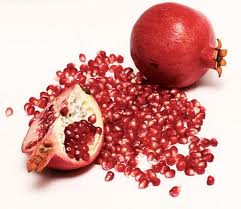
EVERY SEED OF POMEGRANATE

EVERY SEED OF POMEGRANATE 

"Bypass your bypass surgery" by Dr Syed Zair Hussain Rizvi
EVERY SEED OF POMEGRANATE WHICH GOES IN YOUR STOMACH IS A SEED OF LIFE FOR YOUR HEART!!!

Two things are full of benefits for the human being, lukewarm water and pomegranate.

Pomegranate is a seasonal fruit in Pakistan & India so I tried an experiment with dried pomegranate seeds.

I prepared a decoction boiling the fistful of dried seeds in half liter of water for 10 minutes, squeezed the seeds, strained the decoction and advised those patients suffering from painful angina to use a glass of lukewarm decoction on an empty stomach in the morning.

Amazing result was observed, the decoction of dried pomegranate seeds worked like a magic, the feelings of tightness and heaviness of chest and the pain had gone.

It encouraged me to try more experiments on all types of cardiac patients so I tried other experiments on patients who were suffering from p
ainful angina, coronary arterial blockage, cardiac ischemia (insufficient blood flow to the heart muscle) etc., 
waiting for a bypass surgery. The same lukewarm decoction was used on an empty stomach in the morning. The patients experienced quick relief in all symptoms including painful condition.

In another case of coronary arterial blockage the patient started using half glass of fresh pomegranate juice every day for one year, although all symptoms were completely relieved within a week but he continued taking it for a whole year, it completely reversed the plaque build-up and unblocked his arteries to normal, the angiography report confirmed the evidence.

Thus decoction of dried pomegranate seeds, fresh pomegranate juice or eating a whole pomegranate on empty stomach in the morning proved to be a miracle cure for cardiac patients. But the lukewarm dried seeds decoction proved to be more effective compared to eating a whole pomegranate or fresh pomegranate juice.

Use of pomegranate in any way has demonstrated even more dramatic effects as blood thinner, pain killing properties for cardiac patients, lowers LDL (low-density lipoprotein or bad cholesterol) and raises the HDL (high-density lipoprotein or good cholesterol). There are more than 50 different types of heart diseases, the most common being coronary artery disease (CAD), which is the number one killer of both women and men in some countries, and there has been no medicinal cure for this disease. Many cardiac patients have reversed their heart diseases on my advice using one glass of lukewarm decoction of pomegranate dried seeds, half glass of fresh pomegranate juice or eating a whole pomegranate on empty stomach in the morning. It was the very first real breakthrough in the history of cardiology to successfully treat the cardiac diseases by a fruit.

The more super foods to obtain the even faster results for cardiac patients which are most promising curative and protective agents like fresh raisins, quince, guava, prunes (dried plums), natural vinegar, mixture of grape fruit juice and honey in the morning (empty stomach), basil leaves, chicory leaves, powder of oregano leaves and rock salt in equal quantity (in case the patient is not hypertensive) and sesame oil as cooking oil for cardiac patients.

It is regretted to say that treating the heart patients and bypass surgery has become far more profitable business around the world which has failed to help avert life threatening heart attacks and life time cardiac complications resulting in almost paralyzed life. A regular use of pomegranate in any way ensures a healthy cardiac life, thinning your blood, dissolving the blood clots and obstruction inside the coronary arteries, maintains an optimal blood flow, supports a healthy blood pressure, prevents and reverses atherosclerosis. (Thickening of the internal lining of the blood vessels) from whatever I  and observed in last several years, I can say:

"A pomegranate a day keeps the knife of a cardiologist away" you can try and see the wonder.

Saturday, 12 January 2013

Learning from the West ---- Narayana Murty

Precise to the point 
Guess every minister in the country has read it and will now practice it!

A  BRILLIANT  SPEECH !!!!!
Learning from the West ---- Narayana Murty

Ladies and gentlemen: 
It is a pleasure to be here at the Lal Bahadur Shastri Institute of Management. Lal Bahadur Shastri was a man of strong values and he epitomized simple living. He was a freedom fighter and innovative administrator who contributed to nation building in full measure. It is indeed a matter of pride for me to be chosen for the Lal Bahadur Shastri Award for Public Administration and Management Sciences. I thank the jury for this honor.
When I got the invitation to speak here, I decided to speak on an important topic on which I have pondered for years - the role of Western values in contemporary Indian society. Coming from a company that is built on strong values, the topic is close to my heart. Moreover, an organization is representative of society, and some of the lessons that I have learnt are applicable in the national context. In fact, values drive progress and define quality of life in society.
The word community joins two Latin words com ("together" or "with") and unus ("one"). A community, then, is both one and many. It is a unified multitude and not a mere group of people. As it is said in the Vedas: Man can live individually, but can survive only collectively. Hence, the challenge is to form a progressive community by balancing the interests of the individual and that of the society. To meet this, we need to develop a value system where people accept modest sacrifices for the common good.
What is a value system? It is the protocol for behavior that enhances the trust, confidence and commitment of members of the community. It goes beyond the domain of legality - it is about decent and desirable behavior. Further, it includes putting the community interests ahead of your own. Thus, our collective survival and progress is predicated on sound values.
There are two pillars of the cultural value system - loyalty to family and loyalty to community. One should not be in isolation to the other, because, successful societies are those which combine both harmoniously. It is in this context that I will discuss the role of Western values in contemporary Indian society.
Some of you here might say that most of what I am going to discuss are actually Indian values in old ages, and not Western values. I live in the present, not in the bygone era. Therefore, I have seen these values practiced primarily in the West and not in India. Hence, the title of the topic.
I am happy as long as we practice these values - whether we call it Western or old Indian values. As an Indian, I am proud to be part of a culture, which has deep-rooted family values. We have tremendous loyalty to the family. For instance, parents make enormous sacrifices for their children. They support them until they can stand on their own feet. On the other side, children consider it their duty to take care of aged parents.
We believe: Mathru devo bhava - mother is God, and pithru devo bhava - father is God. Further, brothers and sisters sacrifice for each other. In fact, the eldest brother or sister is respected by all the other siblings. As for marriage, it is held to be a sacred union - husband and wife are bonded, most often, for life. In joint families, the entire family works towards the welfare of the family. There is so much love and affection in our family life.
This is the essence of Indian values and one of our key strengths. Our families act as a critical support mechanism for us. In fact, the credit to the success of Infosys goes, as much to the founders as to their families, for supporting them through the tough times. Unfortunately, our attitude towards family life is not reflected in our attitude towards community behavior. From littering the streets to corruption to breaking of contractual obligations, we are apathetic to the common good. In the West - the US, Canada, Europe, Australia, New Zealand - individuals understand that they have to be responsible towards their community.
The primary difference between the West and us is that, there, people have a much better societal orientation. They care more for the society than we do. Further, they generally sacrifice more for the society than us. Quality of life is enhanced because of this. This is where we need to learn from the West.
 
I will talk about some of the lessons that we, Indians, can learn from the West.
In the West, there is respect for the public good. For instance, parks free of litter, clean streets, public toilets free of graffiti - all these are instances of care for the public good. On the contrary, in India, we keep our houses clean and water our gardens everyday - but, when we go to a park, we do not think twice before littering the place.
Corruption, as we see in India, is another example of putting the interest of oneself, and at best that of one's family, above that of the society. Society is relatively corruption free in the West. For instance, it is very difficult to bribe a police officer into avoiding a speeding ticket.
This is because of the individual's responsible behavior towards the community as a whole On the contrary, in India, corruption, tax evasion, cheating and bribery have eaten into our vitals. For instance, contractors bribe officials, and construct low-quality roads and bridges. The result is that society loses in the form of substandard defence equipment and infrastructure, and low-quality recruitment, just to name a few impediments. Unfortunately, this behavior is condoned by almost everyone.
Apathy in solving community matters has held us back from making progress, which is otherwise within our reach. We see serious problems around us but do not try to solve them. We behave as if the problems do not exist or is somebody else's. On the other hand, in the West, people solve societal problems proactively. There are several examples of our apathetic attitude. For instance, all of us are aware of the problem of drought in India.
More than 40 years ago, Dr. K. L. Rao - an irrigation expert, suggested creation of a water grid connecting all the rivers in North and South India, to solve this problem. Unfortunately, nothing has been done about this. The story of power shortage in Bangalore is another instance. In 1983, it was decided to build a thermal power plant to meet Bangalore's power requirements. Unfortunately, we have still not started it. Further, the Milan subway in Bombay is in a deplorable state for the last 40 years, and no action has been taken.
To quote another example, considering the constant travel required in the software industry; five years ago, I had suggested a 240-page passport. This would eliminate frequent visits to the passport office. In fact, we are ready to pay for it. However, I am yet to hear from the Ministry of External Affairs on this.
We, Indians, would do well to remember Thomas Hunter's words: Idleness travels very slowly, and poverty soon overtakes it. What could be the reason for all this? We were ruled by foreigners for over thousand years. Thus, we have always believed that public issues belonged to some foreign ruler and that we have no role in solving them.
Moreover, we have lost the will to proactively solve our own problems. Thus, we have got used to just executing someone else's orders. Borrowing Aristotle's words: We are what we repeatedly do. Thus, having done this over the years, the decision-makers in our society are not trained for solving problems. Our decision-makers look to somebody else to take decisions. Unfortunately, there is nobody to look up to, and this is the tragedy.
Our intellectual arrogance has also not helped our society. I have traveled extensively, and in my experience, have not come across another society where people are as contemptuous of better societies as we are, with as little progress as we have achieved. Remember that arrogance breeds hypocrisy. No other society gloats so much about the past as we do, with as little current accomplishment.
Friends, this is not a new phenomenon, but at least a thousand years old. For instance, Al Barouni, the famous Arabic logician and traveler of the 10th century, who spent about 30 years in India from 997 AD to around 1027 AD, referred to this trait of Indians. According to him, during his visit, most Indian pundits considered it below their dignity even to hold arguments with him. In fact, on a few occasions when a pundit was willing to listen to hm, and found his arguments to be very sound, he invariably asked Barouni: which Indian pundit taught these smart things!
The most important attribute of a progressive society is respect for others who have accomplished more than they themselves have, and learn from them. Contrary to this, our leaders make us believe that other societies do not know anything! At the same time, everyday, in the newspapers, you will find numerous claims from our leaders that ours is the greatest nation. These people would do well to remember Thomas Carlyle's words: The greatest of faults is to be conscious of none.
If we have to progress, we have to change this attitude, listen to people who have performed better than us, learn from them and perform better than them. Infosys is a good example of such an attitude. We continue to rationalize our failures. No other society has mastered this part as well as we have. Obviously, this is an excuse to justify our incompetence, corruption, and apathy. This attitude has to change. As Sir Josiah Stamp has said: It is easy to dodge our responsibilities, but we cannot dodge the consequences of dodging our responsibilities.
Another interesting attribute, which we Indians can learn from the West, is their accountability. Irrespective of your position, in the West, you are held accountable for what you do. However, in India, the more 'important' you are, the less answerable you are. For instance, a senior politician once declared that he 'forgot' to file his tax returns for 10 consecutive years - and he got away with it. To quote another instance, there are over 100 loss making public sector units (central) in India. Nevertheless, I have not seen action taken for bad performance against top managers in these organizations.
Dignity of labor is an integral part of the Western value system. In the West, each person is proud about his or her labor that raises honest sweat. On the other hand, in India, we tend to overlook the significance of those who are not in professional jobs. We have a mind set that reveres only supposedly intellectual work.
For instance, I have seen many engineers, fresh from college, who only want to do cutting-edge work and not work that is of relevance to business and the country. However, be it an organization or society, there are different people performing different roles. For success, all these people are required to discharge their duties. This includes everyone from the CEO to the person who serves tea - every role is important. Hence, we need a mind set that reveres everyone who puts in honest work.
Indians become intimate even without being friendly. They ask favors of strangers without any hesitation. For instance, the other day, while I was traveling from Bangalore to Mantralaya, I met a fellow traveler on the train. Hardly 5 minutes into the conversation, he requested me to speak to his MD about removing him from the bottom 10% list in his company, earmarked for disciplinary action. I was reminded of what Rudyard Kipling once said: A westerner can be friendly without being intimate while an easterner tends to be intimate without being friendly.
Yet another lesson to be learnt from the West, is about their professionalism in dealings. The common good being more important than personal equations, people do not let personal relations interfere with their professional dealings. For instance, they don't hesitate to chastise a colleague, even if he is a personal friend, for incompetent work.
In India, I have seen that we tend to view even work interactions from a personal perspective. Further, we are the most 'thin-skinned' society in the world - we see insults where none is meant. This may be because we were not free for most of the last thousand years. Further, we seem to extend this lack of professionalism to our sense of punctuality. We do not seem to respect the other person's time.
The Indian Standard Time somehow seems to be always running late. Moreover, deadlines are typically not met. How many public projects are completed on time? The disheartening aspect is that we have accepted this as the norm rather than the exception. In the West, they show professionalism by embracing meritocracy. Meritocracy by definition means that we cannot let personal prejudices affect our evaluation of an individual's performance. As we increasingly start to benchmark ourselves with global standards, we have to embrace meritocracy.
In the West, right from a very young age, parents teach their children to be independent in thinking. Thus, they grow up to be strong, confident individuals. In India, we still suffer from feudal thinking. I have seen people, who are otherwise bright, refusing to show independence and preferring to be told what to do by their boss. We need to overcome this attitude if we have to succeed globally.
The Western value system teaches respect to contractual obligation. In the West, contractual obligations are seldom dishonored. This is important - enforceability of legal rights and contracts is the most important factor in the enhancement of credibility of our people and nation.
In India, we consider our marriage vows as sacred. We are willing to sacrifice in order to respect our marriage vows. However, we do not extend this to the public domain. For instance, India had an unfavorable contract with Enron. Instead of punishing the people responsible for negotiating this, we reneged on the contract - this was much before we came to know about the illegal activities at Enron.
To quote another instance, I had given recommendations to several students for the national scholarship for higher studies in US universities. Most of them did not return to India even though contractually they were obliged to spend five years after their degree in India.
In fact, according to a professor at a reputed US university, the maximum default rate for student loans is among Indians - all of these students pass out in flying colors and land lucrative jobs, yet they refuse to pay back their loans. Thus, their action has made it difficult for the students after them, from India, to obtain loans. We have to change this attitude.
Further, we Indians do not display intellectual honesty. For example, our political leaders use mobile phones to tell journalists on the other side that they do not believe in technology! If we want our youngsters to progress, such hypocrisy must be stopped. We are all aware of our rights as citizens. Nevertheless, we often fail to acknowledge the duty that accompanies every right. To borrow Dwight Eisenhower's words: People that values its privileges above its principles soon loses both. Our duty is towards the community as a whole, as much as it is towards our families.
We have to remember that fundamental social problems grow out of a lack of commitment to the common good. To quote Henry Beecher: Culture is that which helps us to work for the betterment of all. Hence, friends, I do believe that we can make our society even better by assimilating these Western values into our own culture - we will be stronger for it.
Most of our behavior comes from greed, lack of self-confidence, lack of confidence in the nation, and lack of respect for the society. To borrow Gandhi's words: There is enough in this world for everyone's need, but not enough for everyone's greed. Let us work towards a society where we would do unto others what we would have others do unto us. Let us all be responsible citizens who make our country a great place to live. In the words of Churchill: Responsibility is the price of greatness. We have to extend our family values beyond the boundaries of our home.
Finally, let us work towards maximum welfare of the maximum people - Samasta janaanaam sukhino bhavantu. Thus, let us - people of this generation, conduct ourselves as great citizens rather than just good people so that we can serve as good examples for our younger generation.